

Quick Answer: What Happens When Stress Becomes Chronic?
Stress is a normal part of life. Your body is designed to respond to challenges, mobilise energy when it is needed and return towards a more restorative state when the challenge has passed. Problems can arise when the demands placed on you repeatedly exceed your capacity to recover.
These demands are not only psychological. A demanding job, caring responsibilities, relationship difficulties, grief, illness, inadequate sleep, poor nutrition, excessive exercise, pain and simply trying to manage too many things for too long can all add to the total load.
Over time, some people begin to notice that their capacity has changed. They may feel profoundly tired yet find it difficult to switch off. Anxiety or low mood may appear. Sleep may become less restorative. Brain fog can become pronounced, with changes in concentration, memory, word finding and mental stamina. Professional women and busy mothers may particularly notice that multitasking and managing competing demands suddenly require much more effort than they once did.
These symptoms have sometimes been described as “adrenal fatigue.” We now know that this is too simplistic. The adrenal glands do not simply become tired from producing too much cortisol. The stress response involves a much wider network that includes the brain and nervous system, the hypothalamic-pituitary-adrenal (HPA) axis, circadian rhythms, immune and inflammatory signalling, metabolism and the gut-brain axis. Chronic stress can influence health through several of these interconnected pathways.
This means the more useful question is not simply: “Are my adrenals exhausted?” It is: “What is contributing to my reduced capacity, what is preventing adequate recovery, and what does my body need to rebuild resilience?” That is the question we will explore throughout this article.
If you are looking for practical help, I also outline the key foundations for recovery and, later in the article, explain my current wholistic therapeutic approach to the symptoms commonly described as “adrenal fatigue.”
A Note About This Article
Originally published: 2015 | Substantially updated: October 2026.
This article was first published in 2015, when I used the term “adrenal fatigue” and approaches to cortisol testing and treatment that reflected my training and clinical practice at the time. My understanding and approach have evolved considerably since then. This article has been substantially rewritten to reflect current evidence, more than 15 years of clinical experience and the wholistic, systems-based approach I use today.
What Happened to “Adrenal Fatigue”?
If you originally found this article by searching for adrenal fatigue, you are certainly not alone. The term has been widely used to describe a collection of symptoms including persistent fatigue, difficulty coping with stress, poor sleep, low mood, brain fog, cravings and reliance on caffeine or other stimulants to get through the day.
The traditional explanation was that prolonged stress forced the adrenal glands to produce increasing amounts of stress hormones until eventually they could no longer keep up. Cortisol production was thought to decline as the adrenal glands became progressively “fatigued” or “exhausted.” It is an appealing explanation because it seems to connect many symptoms under one simple model.
However, research has not demonstrated that chronic psychological or lifestyle stress causes otherwise healthy adrenal glands to progressively lose their ability to produce cortisol in this way. Studies examining cortisol and HPA-axis function in people described as having adrenal fatigue have produced inconsistent findings, and there is no validated test that diagnoses the condition.
The Symptoms Can Still Be Very Real
This distinction matters. Moving beyond the adrenal-fatigue model does not mean dismissing the fatigue, anxiety, low mood, sleep problems, brain fog or reduced capacity that people experience. It means asking better questions about what may be contributing to them.
Persistent fatigue in particular has many possible causes. Sleep disorders, iron deficiency or anemia, thyroid problems, nutrient deficiencies, metabolic problems, medications, mental health conditions, infections and inflammatory conditions, menopause-related changes and other medical conditions can all contribute.
True adrenal insufficiency, including Addison’s disease, is something quite different from adrenal fatigue. It is a recognised medical condition involving inadequate production of adrenal hormones and requires appropriate medical investigation and treatment.
For most people struggling with prolonged stress and exhaustion, however, the more useful place to look is not at the adrenal glands in isolation. We need to look at the wider stress-response system.
Your Stress Response Is a Network, Not Just the Adrenal Glands
Your ability to respond to stress involves constant communication between your brain, nervous system, hormones and the rest of your body. One important part of this network is the hypothalamic-pituitary-adrenal axis, usually shortened to the HPA axis. In simplified terms:
The brain detects or anticipates a challenge → the hypothalamus sends a signal → the pituitary gland releases ACTH (adrenocorticotropic hormone), which signals the adrenal glands → the adrenal glands release cortisol → cortisol feeds information back to the brain and pituitary
This feedback system helps regulate the stress response rather than simply switching cortisol “on” and leaving it there. But the HPA axis is only one part of the picture.
Your autonomic nervous system also responds rapidly to a perceived challenge. Sympathetic nervous-system activity helps prepare you for action, producing what is commonly called the fight-or-flight response. This response is protective. If you need to respond quickly to danger, your immediate priority is not digesting lunch or preparing for deep restorative sleep. Resources are prioritised towards dealing with the challenge.
The Adrenal Glands Also Help Regulate Fluid and Electrolyte Balance
Cortisol is not the only adrenal hormone involved in maintaining physiological stability. The outer layer of the adrenal glands also produces aldosterone, a mineralocorticoid hormone that forms part of the renin-angiotensin-aldosterone system. Aldosterone helps regulate sodium and potassium balance, blood volume and blood pressure, primarily by influencing how the kidneys retain sodium and excrete potassium. Mineralocorticoid signalling also has roles within the brain, where it contributes to salt appetite, fluid balance and aspects of the adaptive stress response.
This is one reason I consider hydration and electrolyte balance as part of the wider clinical picture in people experiencing significant fatigue or reduced resilience. It does not mean that chronic stress automatically causes an electrolyte deficiency or that everyone experiencing these symptoms needs additional salt. Individual requirements vary according to diet, fluid intake, physical activity, sweating, medications, blood pressure, kidney function and other health factors.
What Does Fight or Flight Do to Digestion?
Digestion works best when the body has sufficient opportunity to shift into a more restorative state. During the fight-or-flight response, resources are prioritised towards dealing with the immediate challenge rather than digestion.
When stress activation is frequent or prolonged, changes in autonomic and neuroendocrine signalling can affect digestive secretions, motility, intestinal barrier function and the gut-brain axis. Over time, this may become one contributor to digestive dysfunction, although it is rarely the only one. This helps explain why eating an excellent diet may not be the whole answer if you are also rushing through meals, eating while working, sleeping poorly and living under relentless pressure.
The nervous system helps create the physiological environment in which digestion takes place. The same principle extends well beyond the gut. Your stress response communicates with immune and inflammatory pathways, cardiovascular function, metabolism, reproductive hormone signalling, sleep and the systems regulating energy availability.
This broader cumulative physiological burden associated with repeated or chronic stress and adaptation is often described as allostatic load. This is why I prefer to think of stress physiology as a network rather than an adrenal problem.
Everything influences everything else.
Cortisol: Essential, Rhythmic and Often Misunderstood
Cortisol is frequently called the “stress hormone,” but this description can make it sound as though cortisol itself is the problem. It isn’t.
Cortisol is an essential hormone that helps regulate energy availability, metabolism, blood pressure, immune and inflammatory activity and aspects of cognition and alertness. You need cortisol every day. The goal is therefore not to eliminate cortisol or keep it permanently low. Healthy cortisol regulation is dynamic and rhythmic.
Cortisol Has a Daily Rhythm
Cortisol follows a strong 24-hour pattern. Levels normally begin rising towards the end of the night and around waking. Awakening is generally followed by a further increase over approximately the first 30 to 45 minutes, known as the cortisol awakening response.
Cortisol then generally declines across the day towards lower levels during the biological night. This immediately tells us something important: A cortisol result cannot always be meaningfully understood without considering when it was measured and what was happening around that measurement. It also tells us why circadian biology belongs at the centre of a modern conversation about stress and recovery.
The cortisol awakening response is influenced by interacting circadian, environmental and neurocognitive processes. Light exposure, sleep and awakening timing interact with the body’s circadian system in regulating morning HPA-axis activity. In other words, your stress-response system does not operate independently of your biological clock.
Cortisol, Melatonin and Sleep
Cortisol is not the only hormone following this daily timing system. Melatonin also has a strong circadian rhythm.
Under normal conditions, melatonin begins to rise in the evening as the body prepares for biological night, remains elevated during the night and falls towards morning. Light reaching the eyes during the evening and night can suppress melatonin and influence circadian timing. Cortisol and melatonin should not be thought of as simple opposites. Their normal daily patterns are, however, broadly complementary. Cortisol helps support the transition towards waking and daytime activity, while melatonin helps signal biological night and supports the timing of sleep.
Sleep, cortisol and melatonin are therefore connected through the circadian system. Poor or irregular sleep can interact with HPA-axis regulation, while mistimed light exposure, irregular sleep-wake schedules and circadian disruption can interfere with the biological signals helping to organise sleep and stress physiology. This is one reason supporting recovery involves more than simply “getting eight hours of sleep.”
When you sleep, when you receive light and darkness, and how consistently your days and nights are timed also matter.
Everything Has a Rhythm
The body relies on predictable signals of light and darkness, activity and rest, eating and fasting to help coordinate physiology across the 24-hour day. Cortisol and melatonin are part of this timing system. This is one reason I now place much greater emphasis on circadian health when supporting people experiencing prolonged stress, fatigue and poor sleep.
Morning outdoor light, daylight exposure during the day, appropriate daytime activity, regular daily rhythms, dimmer evenings and darkness at night are not simply “sleep tips.” They provide timing information that helps coordinate many physiological systems. We will return to these foundations when we look at recovery.
For now, the important point is simple: Cortisol is not just about how much you have. Timing, pattern, context and the body’s ability to respond appropriately all matter.
When Load Continually Exceeds Recovery
Stress itself is not the enemy. Human beings are designed to meet challenges. A healthy stress response helps us wake up, concentrate, exercise, respond to an emergency, meet a deadline and adapt to changing circumstances.
The difficulty arises when load continually exceeds recovery. And load can come from many directions at once. It may include:
- Psychological or emotional stress
- Heavy workloads and constant deadlines
- Caring for children, parents or other family members
- Too many commitments and competing demands
- Relationship difficulties
- Grief and major life changes
- Financial pressure
- Chronic pain or illness
- Inadequate or disrupted sleep
- Under-eating or poor nutritional status
- Excessive exercise or inadequate physical recovery
- Digestive or other ongoing health problems
- Continual environmental or lifestyle demands with too little genuine downtime
Often it is not one enormous event. It is the accumulation.
A professional woman may still be performing well at work while simultaneously managing a household, supporting children or ageing parents, navigating menopause, sleeping poorly and trying to maintain all the responsibilities she previously handled with relative ease. Eventually, something begins to change.
Tasks that were once manageable require more effort. Multitasking becomes harder. Concentration slips. Small interruptions feel disproportionately difficult. Exercise takes longer to recover from. Sleep no longer feels restorative. Anxiety or low mood may become more pronounced. Fatigue becomes increasingly difficult to push through. Sometimes people describe this as being “stuck in fight or flight” or having an “exhausted nervous system.”
These phrases can be useful descriptions of how the experience feels, but they are not precise diagnoses. The nervous system has not literally run out of energy, and chronic stress does not produce one identical hormonal pattern in everyone. Repeated or prolonged stress instead involves adaptation across multiple systems, including neuroendocrine, autonomic, immune, metabolic and behavioural pathways.
Energy production is part of this picture too.
Mitochondria, the structures within our cells responsible for producing much of the energy we use, are also involved in cellular signalling and adaptation to stress. Stress mediators can influence mitochondrial function, while mitochondria themselves participate in signalling involved in the body’s response to changing physiological demands.
This is another reason prolonged exhaustion cannot be reduced to the adrenal glands alone. Energy, metabolism, stress signalling, sleep, nutrition and recovery are interconnected. The concept of allostatic load helps us make sense of this cumulative burden without trying to force everyone into the same hormonal pattern or “stage.” And it gives us a much more useful way to think about prolonged stress: The problem is often not stress alone. It is the accumulating mismatch between load and recovery.
That mismatch may develop gradually, which is why the early signs can be easy to dismiss. And that leads to the next important question: How do you recognise when your capacity to cope and recover is beginning to change?
Recognising the Clues: When Your Capacity Begins to Change
One of the difficulties with prolonged stress is that the change is not always dramatic. Sometimes the earliest sign is not that you can no longer function. It is that functioning begins to require much more effort than it used to.
You may still be going to work, caring for your family, exercising, managing appointments and keeping life moving. From the outside, everything may appear relatively normal. But internally, your experience can be quite different. Perhaps you need more caffeine to get going in the morning. You no longer recover as well after a demanding day. Small decisions feel surprisingly difficult. You become more easily overwhelmed by interruptions, noise or several people needing something from you at once.
For some women, brain fog can become pronounced. Finding words may be harder. You may lose your train of thought halfway through a conversation, struggle to retain information or find that tasks requiring sustained concentration take much more effort.
Something I also noticed repeatedly in clinical practice was a reduced ability to multitask. Women who had previously managed complex professional roles, households, children and numerous simultaneous responsibilities would tell me that they could no longer hold all those moving pieces in their heads in the way they once could. This can be particularly distressing when you have always thought of yourself as highly capable.
Other changes may include:
Energy
- Persistent or pronounced fatigue
- Feeling exhausted after demands you previously managed easily
- Needing increasingly long periods to recover
- Greater reliance on caffeine or other stimulants
- Reduced exercise tolerance or recovery
Cognitive Function
- Pronounced brain fog
- Reduced concentration and mental stamina
- Forgetfulness
- Word-finding difficulties
- Decision fatigue
- Difficulty multitasking
- Feeling mentally overloaded by competing demands
Emotional Wellbeing
- Anxiety or feeling increasingly on edge
- Low mood or depressive symptoms
- Irritability
- Feeling easily overwhelmed
- Reduced tolerance for interruptions, noise or demands
- Loss of interest or enjoyment
Sleep
- Difficulty switching off
- Trouble falling or staying asleep
- Waking feeling unrefreshed
- Feeling tired during the day but more alert at night
Physical Wellbeing
- Digestive symptoms becoming more noticeable
- Changes in appetite or cravings
- Reduced resilience to physical demands
- More frequent illness
- Increased sensitivity to stress
None of these symptoms proves that chronic stress is the cause. They can occur with many medical, nutritional, hormonal and psychological conditions. In women during perimenopause and menopause especially, there can be considerable overlap between changes associated with the menopause transition and those experienced during periods of prolonged stress.
This is why I don’t find it particularly helpful to force someone into a label such as “adrenal fatigue,” “burnout” or “nervous system dysregulation” based on a collection of nonspecific symptoms.
The term burnout also has a more specific meaning in formal health terminology, where it refers to an occupational phenomenon associated with chronic workplace stress. In everyday conversation, however, people often use it more broadly to describe reaching a point of profound physical and psychological exhaustion after carrying too much for too long. Both uses can describe something meaningful, but neither tells us everything we need to know about the individual. A better question is: What has changed, what might be contributing to it, and why is this person no longer recovering as well as she once did?
Stress Doesn’t Happen in Isolation: Connecting the Dots
The stress response does not operate in a separate compartment of the body. It communicates continuously with systems involved in sleep, digestion, immunity, reproduction, energy availability and metabolism. This is where a systems-based approach becomes particularly useful. Rather than asking which single system is responsible, we can begin to see how changes in one area may influence another.
Stress, Sleep and Circadian Health
The relationship between stress and sleep works in both directions. Stress can make it more difficult to switch off and sleep well, while inadequate or disrupted sleep can affect emotional regulation, cognitive performance and the way we respond to subsequent stress.
Circadian disruption can add another layer. As we have already seen, cortisol and melatonin follow strong daily rhythms. Light and darkness, sleep-wake timing, physical activity, meal timing and other regular daily signals help coordinate the body’s clocks. When these signals become irregular, the effects can extend beyond sleep.
This is why circadian health has become such an important part of how I think about stress recovery. Morning outdoor light, daylight during the day, appropriate daytime activity, regular rhythms, dimmer evenings and darkness at night help provide the body with reliable timing information. They are simple foundations, but they influence much more than whether you fall asleep easily.
Learn more about these connections in the Sleep & Circadian Health Knowledge Hub.
Stress and Gut Health
The gut and brain communicate constantly through neural, hormonal, immune and metabolic pathways, collectively referred to as the gut-brain axis. Stress can influence this communication.
As we discussed earlier, frequent or prolonged stress activation can affect autonomic and neuroendocrine signalling involved in digestive secretions, motility, intestinal barrier function and the gut-brain axis. Over time, this may become one contributor to digestive dysfunction, although it is rarely the only one.
In my own clinical practice, gut problems were present in almost all of the people I saw with significant prolonged stress and exhaustion. Common findings in this selected group included increased intestinal permeability, low secretory IgA (sIgA) and, in some people, intestinal infections or parasites. This is a clinical observation from my own patient population, rather than evidence that chronic stress inevitably causes these findings.
The relationship can also work in the other direction. An ongoing digestive disorder, infection, impaired nutrient absorption or significant gut symptoms can become an additional physiological and psychological burden when someone is already struggling to recover.
Stress does not necessarily explain the gut problem, and the gut problem does not necessarily explain the stress response. Sometimes they are simply two parts of a larger picture that need to be understood together.
Explore these topics in our Gut Health & the Microbiome Foundational Guide and Secretory IgA (sIgA): What Low and High Levels Can Tell You About Gut Health.
Stress, Hormones and Menopause
The stress-response system also communicates with the reproductive hormone system. The HPA axis interacts with the hypothalamic-pituitary-gonadal (HPG) axis, which helps regulate reproductive function. Stress and reproductive hormone physiology therefore should not be viewed as completely separate processes.
You may have heard this relationship explained through the concept of “pregnenolone steal.” Pregnenolone is an important precursor in steroid hormone production. The older theory proposed that chronic stress preferentially diverted pregnenolone towards cortisol production, leaving less available for hormones such as progesterone. It offered an appealing explanation for why women experiencing prolonged stress might also notice hormonal symptoms.
The biology is more complex. “Pregnenolone steal” should not be treated as an established general mechanism for hormone imbalance during chronic stress. A more useful way to understand the relationship is through the wider communication between the brain, HPA axis and HPG axis, alongside other factors affecting steroid hormone production, signalling and metabolism.
This becomes particularly relevant during perimenopause, when ovarian hormone production is already becoming more variable. Anxiety, sleep disturbance, fatigue, brain fog and mood changes can overlap considerably with experiences associated with prolonged stress. Hot flushes and night sweats may further disrupt sleep and recovery, potentially adding another physiological load. This is another reason it can be difficult to determine where “stress” ends and “menopause” begins by symptoms alone.
What About the Adrenal Glands After Menopause?
The adrenal glands remain relevant to hormone physiology after menopause, but not because they simply “take over” the work of the ovaries. As ovarian hormone production declines, the adrenal glands continue to produce androgen precursors including DHEA, DHEAS and androstenedione. These can be converted locally in peripheral tissues into active androgens and estrogens, making their contribution relatively more important after ovarian hormone production has substantially declined.
Older models sometimes used this relationship to suggest that women with “exhausted adrenals” would inevitably experience more difficult menopausal symptoms. I would interpret that more cautiously today.
Menopause occurs within a much wider neuroendocrine environment involving changing sex hormones, stress physiology, autonomic regulation, sleep and circadian rhythms. This interconnectedness may help us understand why some women notice that hot flushes, sleep disruption, anxiety and other symptoms become harder to manage during particularly stressful periods, without suggesting that adrenal fatigue itself is the cause of menopause symptoms.
Explore more in our article Menopause, Hormones & Whole-Body Health After 40. Visit the Menopause Knowledge Hub for more in-depth articles and guides.
Stress and Metabolic Health
Stress physiology is also closely connected with metabolism. Cortisol helps make energy available when the body needs to respond to a challenge. This is part of its normal physiological role. The picture becomes more complicated when prolonged stress occurs alongside poor sleep, circadian disruption, inadequate movement, changes in appetite, irregular eating patterns or other metabolic pressures.
This is why statements such as “cortisol causes belly fat” are too simplistic. Stress and metabolic health interact through multiple pathways involving glucose regulation, appetite and satiety signalling, sleep, physical activity, food choices, sex hormones and individual metabolic health. Mitochondria, which we introduced earlier, add another layer because cellular energy production and stress adaptation are themselves interconnected.
The practical point is not that chronic stress inevitably “damages your metabolism.” It is that stress, sleep, circadian health, energy regulation and metabolism influence one another, particularly when several areas are under strain at the same time.
This is explored in much greater depth in the Naturimedica Metabolic Health resources: Metabolic Health After 40: A Systems-Based Guide to Energy, Weight and Hormonal Balance.
Browse our library of Stress and Cortisol articles.
Rest Is Important, But Rest Isn’t Always Recovery
When someone has been under considerable stress for a long time, the obvious solution can seem to be:
Stop. Rest. Take a holiday.
Sometimes that is exactly what is needed. Reducing excessive demands can be an essential part of recovery. But one of the important lessons from both my own experience and many years of clinical practice is that removing the stressor and recovering from its effects are not necessarily the same thing.
Practitioner Perspective
My interest in stress physiology and recovery became personal after I experienced significant burnout myself many years ago. Fatigue was only part of the picture. Anxiety and depression were pronounced, alongside physical and cognitive changes that I later came to recognise in many people experiencing prolonged periods of stress and overload.
At that time, the adrenal-fatigue model was widely used within functional and naturopathic medicine, and it influenced my early understanding and clinical approach. Over time, both the science and my clinical thinking evolved.
I saw people take considerable time away from highly stressful work environments, sometimes for months, and yet not immediately regain their previous energy and resilience. I also saw people improve significantly, return to essentially the same stressful environment and begin struggling again. That taught me something important: Recovery is not the same as relaxation.
A holiday can be restorative. Time away from work can be extremely valuable. But recovery from prolonged overload may involve much more than simply stopping for a few weeks. The nervous system may need repeated opportunities to move appropriately between activation and recovery. Sleep and circadian rhythms may need attention. Nutritional deficiencies or other health problems may need to be identified. Digestive, metabolic or hormonal factors may be contributing. Psychological support may also be important.
And sometimes the environment itself needs to change. For some of the more depleted people I have worked with, substantial recovery unfolded over 12 months or longer. That does not mean everyone requires this amount of time, nor should it be interpreted as a predicted recovery period.
It is simply an observation from clinical practice that rebuilding resilience after prolonged overload can sometimes be a gradual process. Consistency mattered. Adequate rest, restorative sleep, good nutrition, appropriate movement, time in nature, supportive relationships, circadian rhythms and targeted nutritional or herbal support where appropriate all formed part of that bigger picture.
But there was another lesson too: You cannot always regulate your way out of an environment that continually overwhelms your capacity to recover.
That does not mean everyone experiencing stress needs to leave their job or radically change their life. It means recovery cannot always be reduced to breathing exercises, meditation, supplements or becoming better at “coping.” Sometimes the demands themselves need to be examined.
This is also why prevention matters so much. The earlier we recognise that load is repeatedly exceeding recovery, the more opportunity we have to make meaningful changes before ordinary functioning begins to require an extraordinary amount of effort.
Don’t Assume Everything Is Stress
There is another side to this discussion that is just as important. Once someone has been told that her symptoms are due to stress, burnout, adrenal fatigue or nervous system dysregulation, there is a risk that everything that happens afterwards gets interpreted through the same lens. That can delay recognition of other problems. Persistent fatigue, brain fog, anxiety, poor sleep, reduced exercise tolerance and difficulty concentrating are not specific to chronic stress. Depending on the individual, other contributors may include:
- Anemia or iron deficiency
- Anxiety disorders, depression or other mental health conditions
- Chronic infection or inflammatory conditions
- Digestive disorders and impaired nutrient absorption
- Inadequate energy or protein intake
- Medication effects
- Metabolic dysfunction including blood sugar imbalances
- Nutritional deficiencies
- Perimenopause and menopause-related changes
- Sleep disorders, including sleep apnoea
- Thyroid disorders
- Other endocrine disorders, including genuine adrenal insufficiency
Several contributors can exist at the same time.
A woman in her early 50s, for example, might be navigating substantial work stress, perimenopause, iron deficiency and disrupted sleep. Finding one contributor does not automatically explain the whole picture. Similarly, significant anxiety or depression deserves appropriate assessment and support rather than being dismissed as merely a symptom of “high cortisol.”
This is where a wholistic approach should make us more discerning, not less. Seeing the whole person does not mean assuming that everything is connected through one root cause. It means looking broadly enough to identify the factors that actually matter for that individual.
Stress may be part of the picture without being the whole explanation. Once we have considered that wider picture, another question often arises: Would measuring cortisol help us understand what is happening?
Do You Need Cortisol or DHEA Testing?
Because cortisol plays such an important role in the stress response, it is understandable that people experiencing persistent fatigue or reduced resilience often wonder whether they should have their cortisol levels tested. The answer depends on what question we are trying to answer.
Cortisol can be measured in blood, saliva or urine, but these tests are not interchangeable and are used for different purposes. Medical testing for conditions involving abnormal cortisol production, such as adrenal insufficiency or Cushing syndrome, is different from using multiple saliva samples across the day to examine a person’s diurnal cortisol pattern.
Earlier in my practice, I used functional cortisol and DHEA testing extensively and found the patterns useful in some people when individualising nutritional and supplemental support. I no longer interpret these results as stages of adrenal exhaustion. There is no validated cortisol or DHEA pattern that diagnoses “adrenal fatigue,” and chronic stress does not produce one predictable cortisol pattern in everyone.
That does not mean cortisol measurements contain no useful physiological information. In selected circumstances, looking at cortisol at appropriate times may provide information about aspects of HPA-axis activity and daily cortisol rhythms. But these results need to be interpreted cautiously and within the wider clinical picture.
The important principle is: Testing should follow the clinical question rather than create the diagnosis. If symptoms suggest a genuine endocrine disorder, appropriate medical investigation is important. For someone experiencing prolonged stress, fatigue or reduced resilience, functional cortisol testing may occasionally add useful information. But it should not replace the more fundamental questions about symptoms, medical history, sleep, nutrition, hormonal health, psychological wellbeing, lifestyle, environment and the other factors influencing recovery.
Supporting Recovery: Where Do You Begin?
When someone feels profoundly depleted, there can be a strong temptation to search for the missing supplement, hormone, diet or treatment that will finally provide the answer. Sometimes targeted treatment is necessary. But recovery from prolonged stress often begins with something more fundamental: Creating the conditions in which the body can recover.
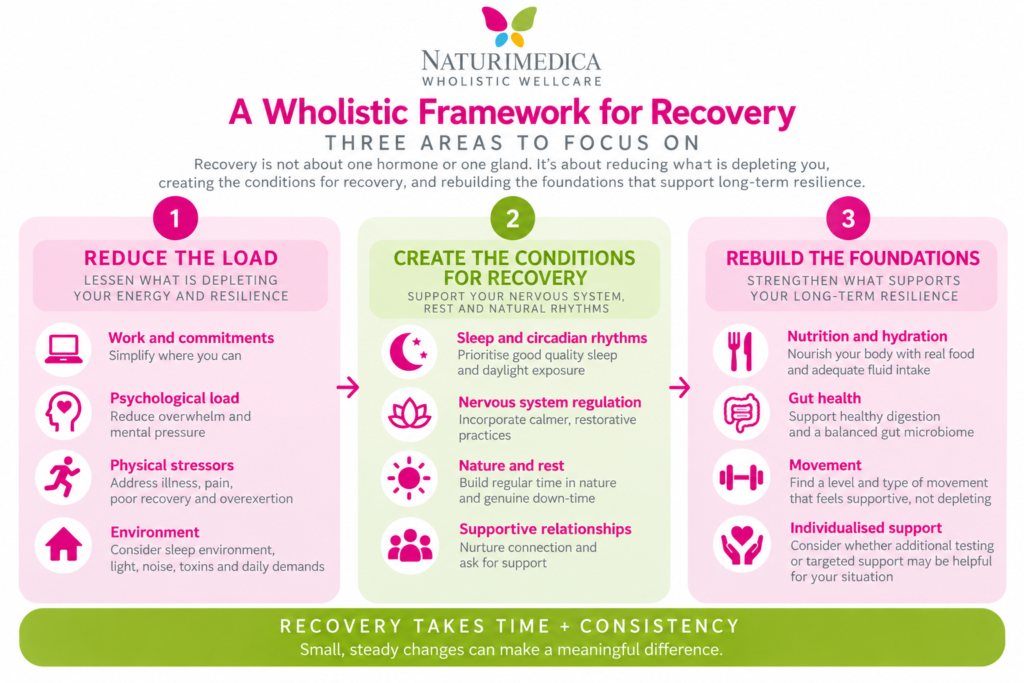
I think about this in three broad areas.
1. Reduce the Load
Start by asking what is continually consuming your physical, mental and emotional capacity. This may include work demands, caring responsibilities, relationship difficulties, excessive commitments, financial pressure, inadequate sleep, illness, pain, overtraining or simply having too little time in which nothing is required of you. Not every stressor can be removed. Nor does everyone need to leave a stressful job or radically restructure their life. But if demands continually exceed your capacity to recover, simply adding supplements or relaxation techniques may not address the underlying problem. Sometimes recovery requires doing less before the body is capable of doing more.
2. Create the Conditions for Recovery
The nervous system needs regular opportunities to shift appropriately between activation and recovery. Useful foundations may include:
- Adequate rest and genuine downtime
- Appropriate movement without continually pushing beyond your capacity
- Consistent sleep-wake and daily rhythms
- Dimmer light in the evening and darkness at night
- Morning outdoor light and regular daylight exposure
- Psychological support when needed
- Relaxation, breathing or mindfulness practices where helpful
- Restorative sleep
- Supportive relationships and social connection
- Time outdoors and in nature
Nature deserves a place here without needing to become another treatment protocol. Walking outside, gardening, sitting near water, spending time in green space or simply stepping away from screens and work can provide something that increasingly busy lives often lack: space without continual demands.
Circadian rhythms are equally fundamental. Regular light-dark exposure, sleep timing, movement and meal timing provide signals that help organise physiology across the day and night. Recovery is not something the body does only while you are asleep. It is supported by the way you live across the entire 24-hour day.
3. Rebuild the Foundations
Prolonged stress does not remove the body’s basic requirements. Adequate nutrition, protein, hydration, micronutrients, digestive function, movement and metabolic health still matter. Where deficiencies or other health problems are identified, they should be addressed appropriately.
Gut health may need attention. Hormonal or metabolic changes may be contributing. Nutritional requirements may have changed. Some people may benefit from individualised herbal or nutritional support. But these interventions work best as part of a bigger picture rather than as attempts to “boost the adrenals.” The goal is not to find one treatment that fixes everything. It is to See the Whole Person and Build Strong Foundations.
When You’re Doing Everything “Right” But Still Not Improving
This is also an important time to resist the idea that more treatment must be better. If you are taking numerous supplements, following increasingly restrictive diets and trying multiple protocols but continuing to deteriorate or failing to improve, it may be time to reconsider the assumptions behind the treatment. Ask:
- Could something have been missed?
- Is the diagnosis or working explanation correct?
- Is the treatment itself adding another burden?
- Would simplifying be more useful than adding another intervention?
Sometimes the most meaningful next step is not another supplement. It is reassessment.
Prevention: Notice When Load and Recovery Begin to Drift Apart
Ideally, we do not wait until someone is profoundly exhausted before paying attention to stress and recovery. The earlier signs can be subtle.
Sleep may become less restorative. Exercise recovery takes longer. More caffeine is needed. Brain fog becomes noticeable. Multitasking becomes harder. Irritability or anxiety increases. Digestive symptoms worsen. Weekends are increasingly spent simply recovering enough to begin another working week. These are not diagnostic signs of adrenal fatigue, burnout or any other single condition. They are prompts to pay attention. Ask yourself:
- Has my load increased?
- Has my capacity for recovery decreased?
- What has changed?
- What could I change now rather than waiting until I am forced to stop?
The aim of prevention is not to eliminate stress from life. Stress is part of being human, and the ability to respond and adapt to challenges is part of healthy physiology. The aim is to recognise when the balance has been shifting for too long.
The earlier we respond to a growing mismatch between load and recovery, the less likely we are to reach the point where major changes are required simply to regain capacity. Building resilience therefore isn’t only something we do after becoming depleted. It is part of how we live well.
The Naturimedica Approach to Stress and Recovery
The way I understand prolonged stress today is very different from the adrenal-fatigue model I used when this article was first written. The goal is not to “boost” exhausted adrenal glands, suppress cortisol or replace one broad diagnostic label with another. It is to connect the dots.
- What is creating the load?
- What is interfering with recovery?
- How are sleep and circadian rhythms functioning?
- Could gut, hormonal, metabolic, nutritional or psychological factors be contributing?
- And which foundations need to be rebuilt first?
This reflects the wider Naturimedica approach.
See the Whole Person
Look beyond individual symptoms to understand the wider pattern and the factors influencing health.
Build Strong Foundations
Support sleep and circadian rhythms, nutrition, movement, nature and environment, relationships, self-care and nervous system regulation as part of creating the conditions for better health.
Live Well
The ultimate goal is not simply to reduce symptoms. It is to rebuild resilience, support the body’s capacity to adapt and create a way of living that supports health over the longer term. If persistent fatigue, stress, poor sleep, brain fog or reduced resilience are affecting your quality of life and you would like help making sense of the bigger picture, personalised naturopathic consultations are available online Australia-wide.
My Wholistic Approach to “Adrenal Fatigue” Symptoms and Recovery
If you arrived at this article after searching for adrenal fatigue treatment, you may understandably be wondering what I actually recommend.
As I have explained throughout this article, I no longer treat “adrenal fatigue” as a diagnosis or assume that persistent fatigue, poor stress tolerance, anxiety, brain fog or sleep problems are caused by exhausted adrenal glands. But I have spent more than 15 years helping people experiencing these kinds of symptoms.
My approach today is broader and more individualised. Rather than following a standard “adrenal support” protocol, I try to understand what is creating the load, what may be interfering with recovery and which areas need attention first.
1. Understand the Whole Picture
The starting point is not a supplement or a cortisol test. It is the person. I look at the pattern of symptoms alongside factors such as:
- Current and previous stress load
- Digestive and gut health
- Energy and metabolic health
- Existing health conditions and medications
- Hormonal changes, including perimenopause and menopause
- Nutrition and hydration
- Relevant pathology and previous test results
- Sleep and circadian rhythms
- Work, caring responsibilities, relationships and environmental demands
Further investigation or testing may sometimes be useful, but it should answer a meaningful clinical question rather than simply confirm a label. This is the See the Whole Person part of the Naturimedica approach.
2. Reduce Load and Support Nervous System Regulation
If someone’s life continually demands more than she has the capacity to recover from, supplements alone are unlikely to solve the problem. Depending on the individual, this part of the therapeutic approach may involve:
- Appropriate movement without excessive physical stress
- Creating genuine periods of rest and recovery
- Improving sleep
- Increasing regular contact with nature and outdoor light
- Re-establishing supportive circadian rhythms
- Reducing avoidable sources of overload where possible
- Supporting psychological and emotional wellbeing
- Using simple practices that support nervous system regulation
Sometimes relatively small changes make a meaningful difference. At other times, the environment itself needs to be examined more seriously. Useful Naturimedica resources include:
- See the Whole Person: Make Sense of Your Sleep. Practical Steps to Support Your Sleep Naturally (guide and workbook)
- 24-Hour Circadian Guide and Workbook: Work With Your Biology, Strengthen Your Daily Rhythm. Live Well.
- Daily Light & Darkness Routine: A Circadian Light Guide for Better Sleep, Energy and Hormone Health (guide and workbook)
3. Rebuild Nutritional, Metabolic and Digestive Foundations
The body still needs the raw materials and physiological conditions required for normal function and recovery. Depending on what I find, this may include addressing:
- Adequate energy and protein intake
- Blood glucose regulation and metabolic health
- Digestive function
- Hydration and electrolyte balance including whether sodium and other electrolyte intake is appropriate for the individual’s diet, activity level, fluid losses and health circumstances
- Micronutrient adequacy
- Nutritional quality and meal patterns
- Relevant gut or microbiome problems
Digestive health deserves particular attention where symptoms or history suggest it is contributing. This may involve looking more closely at stomach acid and upper digestive function, pancreatic and biliary function, the small and large intestine, nutrient absorption and the microbiome. The aim is not to treat every system at once. It is to identify which foundations are actually under strain in this person.
Practitioner Insight
In some people experiencing fatigue, low blood pressure or increased fluid losses, I have found that paying attention to fluid and electrolyte intake can be helpful. This may sometimes include additional dietary salt where appropriate. This needs to be individualised, particularly in people with high blood pressure, kidney disease, cardiovascular conditions or medications that affect fluid and electrolyte balance.
Useful Naturimedica resources include:
- Gut Health and the Microbiome: A Foundational Guide
- Gut Health and Microbiome Knowledge Hub
- Nutrition Knowledge Hub
- Electrolytes, Hydration and Energy Balance
- Dehydration Symptoms and Healthy Hydration
4. Use Herbal and Nutritional Support Selectively
Herbal medicines and nutritional supplements can be valuable therapeutic tools, but I don’t use a standard collection of “adrenal supplements” for everyone experiencing stress and fatigue. Where appropriate, herbal medicines may be selected according to the individual’s symptoms, health history, medications and wider clinical picture.
Herbs I may consider in different circumstances include Siberian ginseng (Eleutherococcus senticosus), Panax ginseng, Rhodiola (Rhodiola rosea), Withania (Withania somnifera), Holy basil (Ocimum tenuiflorum), Licorice (Glycyrrhiza glabra) and Lemon balm (Melissa officinalis). Likewise, nutrients such as magnesium, B vitamins, vitamin C, zinc and omega-3 fatty acids may be relevant when there is a clinical or nutritional reason to use them.
The important distinction is that these are tools, not an adrenal-fatigue protocol.
What is appropriate for one person may be unnecessary or unsuitable for another, particularly where medications or medical conditions need to be considered. Herbal medicines and targeted supplements are best individualised with appropriately qualified practitioner guidance. Useful Naturimedica resources include:
- Holy Basil: Benefits for Stress, Anxiety and Fatigue
- Lemon Balm for Insomnia, Anxiety, Memory and Skin
- Herbal Medicine Knowledge Hub
- Magnesium for Anxiety, Stress, High Blood Pressure and Muscle Pain
5. Review, Adjust and Allow Recovery Time
Finally, treatment needs to evolve. If someone is improving, we can build gradually on what is working.
If she is not improving, the answer is not automatically to add more supplements or another protocol. It may be necessary to reconsider the original assumptions, simplify the treatment, investigate another contributor or address an ongoing source of physiological or psychological load.
Recovery also takes time. As I discussed earlier, some of the more depleted people I have worked with needed many months of consistent support before substantial resilience returned. Others improved much sooner. The goal is not to force the body back to productivity as quickly as possible. It is to create the conditions for sustainable recovery and greater resilience over time.
Personalised Support
If persistent fatigue, poor sleep, brain fog, anxiety, reduced resilience or difficulty coping with stress are affecting your quality of life, a wholistic assessment can help you make sense of how the different pieces may fit together. My approach is to See the Whole Person, Build Strong Foundations and develop an individualised plan based on what is actually relevant to you, rather than treating a label. Online naturopathic consultations are available Australia-wide.
If you don’t live in Australia, you’re warmly invited to explore the many educational resources available on this website, including articles, health guides and free downloads, which have been created to help people better understand their health and make informed decisions wherever they may live.
Frequently Asked Questions
Adrenal fatigue is not recognised as a medical diagnosis, and research has not demonstrated that everyday chronic stress progressively exhausts otherwise healthy adrenal glands until they can no longer produce sufficient cortisol. However, the symptoms commonly attributed to adrenal fatigue, including persistent fatigue, poor sleep, brain fog and reduced resilience, can be very real and deserve appropriate investigation.
There is rarely one universal explanation. Prolonged stress, inadequate recovery, poor sleep, circadian disruption, nutritional deficiencies, thyroid problems, iron deficiency, menopause-related changes, metabolic or digestive problems, medications, mental health conditions and other medical issues can all contribute. Several may be present at the same time.
Chronic stress does not produce one predictable cortisol pattern in everyone. HPA-axis activity varies according to factors including the individual, the nature and duration of the stressor, health status, sleep and circadian timing, and when cortisol is measured. A low cortisol result should therefore not automatically be interpreted as evidence of “adrenal exhaustion.”
Yes. Stress-response pathways communicate with the gut-brain axis, immune system and reproductive hormone system. Prolonged or repeated stress can influence digestive function, while the HPA and reproductive HPG axes interact at several levels. These relationships are more complex than older explanations such as “pregnenolone steal” or the idea that exhausted adrenal glands directly cause hormone imbalance.
Sometimes, but the reason for testing matters. Medical cortisol testing is important when an endocrine disorder such as adrenal insufficiency or excess cortisol production is suspected. Functional diurnal cortisol testing may provide additional information in selected situations, but it does not diagnose adrenal fatigue and should be interpreted within the wider clinical picture.
There is no standard recovery timetable. The answer depends on the duration and nature of the stress, whether significant stressors continue, sleep and circadian health, nutritional and medical factors, psychological wellbeing and individual circumstances.
In my clinical experience, some significantly depleted people required 12 months or longer to rebuild substantial resilience, while others improved considerably sooner. The important point is not the number of months. Recovery usually depends more on consistent support and meaningful change than on finding one quick solution.
A Note About Older Comments
Some comments and responses below date back to 2015 and reflect the terminology, testing approaches and clinical understanding I used at that time. My approach to stress physiology, cortisol and the concept historically described as “adrenal fatigue” has evolved considerably since then. Please refer to the updated article above for my current evidence-informed perspective.
A Final Thought: Recovery Is About More Than the Adrenal Glands
If there is one message I hope you take from this article, it is that the symptoms once described as “adrenal fatigue” deserve to be taken seriously, even though our understanding of what causes them has changed.
Profound fatigue, poor sleep, anxiety, brain fog and a reduced ability to cope with everyday demands can be very real. But they rarely belong to one gland, one hormone or one simple explanation. Recovery begins by looking at the whole picture.
What is creating the load? What is interfering with recovery? What does your nervous system need? How are you sleeping and living across the 24-hour day? Are nutritional, digestive, hormonal, metabolic or psychological factors contributing? And are the foundations that once supported your resilience still strong enough for the life you are asking your body to manage?
Sometimes the answer is rest. Sometimes it is treatment. Sometimes it is better nourishment, better sleep, more daylight, more time in nature, appropriate support or fewer demands. And sometimes it requires changing something in our lives that we have been trying for too long simply to cope with.
The goal is not to eliminate stress or to chase the perfect cortisol level. It is to create the conditions in which your body can respond, recover and adapt well again. That is what I mean by building resilience.
See the Whole Person. Build Strong Foundations. Live Well.
Best of Health
Joanna Sochan
Wholistic Health and Lifestyle Therapist
Integrative health support combining clinical evidence, systems-based thinking and traditional naturopathic wisdom for lasting health and wellbeing
References & Further Reading
- Bornstein SR, Allolio B, Arlt W, et al. Diagnosis and treatment of primary adrenal insufficiency: an Endocrine Society clinical practice guideline. Journal of Clinical Endocrinology & Metabolism. 2016;101(2):364–389. doi:10.1210/jc.2015-1710. PubMed
- Cadegiani FA, Kater CE. Adrenal fatigue does not exist: a systematic review. BMC Endocrine Disorders. 2016;16:48. doi:10.1186/s12902-016-0128-4. PubMed
- Cyr M, Artenie DZ, Al Bikaii A, Borsook D, Olson JA. The effect of evening light on circadian-related outcomes: a systematic review. Sleep Medicine Reviews. 2022;64:101660. doi:10.1016/j.smrv.2022.101660. PubMed
- de Kloet ER. Brain mineralocorticoid and glucocorticoid receptor balance in neuroendocrine regulation and stress-related psychiatric etiopathologies. Current Opinion in Endocrine and Metabolic Research. 2022;24:100352.ScienceDirect https://doi.org/10.1016/j.coemr.2022.100352
- de Kloet ER, Joëls M. Brain mineralocorticoid receptor function in control of salt balance and stress-adaptation. Physiology & Behavior. 2017;178:13–20. doi:10.1016/j.physbeh.2016.12.045. PubMed
- Endocrine Society. Adrenal Fatigue. Updated January 25, 2022. Endocrine Society: Adrenal Fatigue Endocrine
- Fan YA, Behar E, Cohen AI, Law C, Gunthert KC. The relationship between daily stress and hot flashes in women of menopausal age. Journal of Clinical Psychology. Published online August 4, 2026. doi:10.1002/jclp.70201. PubMed
- Holtmann G, Shah A, Morrison M. Pathophysiology of functional gastrointestinal disorders: a holistic overview. Digestive Diseases. 2017;35(Suppl 1):5–13. doi:10.1159/000485409. PubMed
- Kuckuck S, van der Valk ES, Scheurink AJW, et al. Glucocorticoids, stress and eating: the mediating role of appetite-regulating hormones. Obesity Reviews. 2023;24(3):e13539. doi:10.1111/obr.13539. PubMed
- Labrie F. All sex steroids are made intracellularly in peripheral tissues by the mechanisms of intracrinology after menopause. Journal of Steroid Biochemistry and Molecular Biology. 2015;145:133–138. doi:10.1016/j.jsbmb.2014.06.001. PubMed
- La Torre D, Van Oudenhove L, Vanuytsel T, Verbeke K. Psychosocial stress-induced intestinal permeability in healthy humans: what is the evidence? Neurobiology of Stress. 2023;27:100579. doi:10.1016/j.ynstr.2023.100579. PubMed
- McEwen BS. Central effects of stress hormones in health and disease: understanding the protective and damaging effects of stress and stress mediators. European Journal of Pharmacology. 2008;583(2–3):174–185. doi:10.1016/j.ejphar.2007.11.071. PubMed Central (PMC)
- McEwen BS, Karatsoreos IN. Sleep deprivation and circadian disruption: stress, allostasis, and allostatic load. Sleep Medicine Clinics. 2022;17(2):253–262. doi:10.1016/j.jsmc.2022.03.005. PubMed
- Nieman LK, Biller BMK, Findling JW, Newell-Price J, Savage MO, Stewart PM, Montori VM. The diagnosis of Cushing’s syndrome: an Endocrine Society clinical practice guideline. Journal of Clinical Endocrinology & Metabolism. 2008;93(5):1526–1540. doi:10.1210/jc.2008-0125. PubMed
- Picard M, McEwen BS. Psychological stress and mitochondria: a systematic review. Psychosomatic Medicine. 2018;80(2):141–153. doi:10.1097/PSY.0000000000000545. PubMed
- Spencer RL, Chun LE, Hartsock MJ, Woodruff ER. Glucocorticoid hormones are both a major circadian signal and major stress signal: how this shared signal contributes to a dynamic relationship between the circadian and stress systems. Frontiers in Neuroendocrinology. 2018;49:52–71. doi:10.1016/j.yfrne.2017.12.005. PubMed
- Stalder T, Oster H, Abelson JL, Huthsteiner K, Klucken T, Clow A. The cortisol awakening response: regulation and functional significance. Endocrine Reviews. 2025;46(1):43–59. https://doi.org/10.1210/endrev/bnae024 DOI
- Toufexis D, Rivarola MA, Lara H, Viau V. Stress and the reproductive axis. Journal of Neuroendocrinology. 2014;26(9):573–586. doi:10.1111/jne.12179.
PubMed - van Dalfsen JH, Markus CR. The influence of sleep on human hypothalamic-pituitary-adrenal (HPA) axis reactivity: a systematic review. Sleep Medicine Reviews. 2018;39:187–194. doi:10.1016/j.smrv.2017.10.002. PubMed
- World Health Organization. Burn-out an “occupational phenomenon”: International Classification of Diseases. May 28, 2019. World Health Organization: Burn-out an occupational phenomenon World Health Organization
Disclaimer: This content is for informational and educational purposes only and is not intended to diagnose, treat, cure, or prevent any disease. It is not a substitute for professional medical advice, diagnosis, or treatment. Always consult a qualified healthcare provider before making any changes to your health regimen, particularly if you are taking prescription or over-the-counter medications or have a medical condition.
Bio: Joanna Sochan is a Wholistic Natural Therapist and founder of Naturimedica Wholistic Wellcare. She has over 15 years of clinical experience working with complex health presentations, with a focus on gut health, food sensitivities, women’s hormone health (including perimenopause and menopause), metabolic health, weight regulation, and circadian biology. She works with clients Australia-wide and online, and also develops therapeutic programs, eCourses, and educational resources designed to support long-term, sustainable wellbeing. View full bio.
Hi,
In 2011 I had half of my thyroid removed along with a large goiter. I haven’t been on any medication for thyroid function as my GP keeps saying it’s within the normal range. I’ve suffered with adrenal fatigue since late 2016 after the death of my son and have had previous saliva tests for this and also my estrogen levels which were extremely high. I’m constantly exhausted, have gained an enormous amount of weight, my body aches and I’m now having some serious health problems which my GP cannot explain or find an answer for. Would you please respond with costs of testing and treatment, I would be very interested.
Hi Jodie
I’ll respond to you via email shortly.
Hi Joanna,
Thanks for the great article! I have been suffering from adrenal Exhaustion for 2 years now and I’m at the point where I’m having paradoxical reactions to every single supplement that is of any benefit. Even probiotics! I have seen several functional Medicine doctors and naturopaths and read countless articles, websites and blogs on how to treat adrenal Exhaustion. So I have implemented all the suggestions and already live a healthy toxic free lifestyle but I’m still suffering and my sleep and anxiety are getting worse. Do you have any suggestions on how I improve my health if I can’t take supplements?
Many thanks
Leah
Hi Leah
I’m glad you enjoyed the article.
From your short description, I suggest you look closely at your gut function and integrity, as from my experience all food or supplement intolerances are not about these items per se, but the about gut not being able to ‘deal’ with them because of gut wall damage, imbalances of the gut bacteria or lack of digestive enzymes, to name a few. Stool and other gut tests should help with pinpointing any problem areas.
Hi Joanna,
Thanks, I was wondering how B vitamin and mineral deficiencies fit into the picture. If you have these, are they addressed before using supplements like dhea, pregnonelone?
Hi Stephen
Any mineral and/or vitamin deficiencies are dealt with at the same time as taking supplements such as DHEA and pregnonelone. The minerals/vitamins are key to restore biochemical pathways in the body and enable DHEA/pregnonelone to work. FYI here in Australia naturopaths are not allowed to use DHEA or pregnonelone. We use herbs, specific nutrients and tailored nutrition instead.
Hi,
I am certain that my husband has adrenal fatigue and would like some more details regarding costs of consultations, medications etc.
Thanks
Marissa
Hi Marissa
Thank you for your enquiry. I’ll respond via email shortly.
Hi,
I am certain that i have adrenal fatigue and would like some more details regarding costs of consultations, medications etc.
Thanks
Brad
Hi Brad
I’ll respond via email shortly.
Hi
I would like to know the costs of seeing someone in Sydney for adrenal fatigue treatment.
Here are the basic details – http://naturimedica.com/contact/
I have Hashimoto’s and Fibromyalgia. What is the cost of consultation and tests. I live in Melbourne
Hi there, I will respond shortly via your email.
Hi Joanna
I’m very interested in the kalish method. Currently suffering from brain fog and have days when I’m completely exhausted and anxiety is also present. Last year I was diagnosed with eosinophilic esophagitis. Eat a very clean diet with no known allergens. Wondering if it is all interrelated. Haven’t been able to find an overall solution and it is becoming tiresome. I live in Brisbane.
Thanks
Hi there!
I’ll respond to your comment to your email address.
Joanna
Hi Joanna,
I am interested in your services. Would you please send me through some details on your practice including costs and treatment plans.
Regards,
Chris
Hi Chris
Are you in Australia?
Hello I’m interested in the Kalish method. Can you please email me the cost at my email address irene.vass@ymail.com
I have test results available for review.
Yes, I will.
Hi Joanna,
Could you please email me costs too. I’ve had an undiagnosed chronic illness for past 12 months, which came about straight after the birth of my second child.
I’m in Melbourne.
Thank you
I will email the info for you today.
I need a holistic program to cure my total body imbalance. Do you set a dietry plan, complete herbal suppliments including time of day to take, dose and everything. I need someone to pretty much dictate my schedule for what i consume to heal myself. I find doctors wanto to treat symptoms and lots of alternative practitioners are not able to holisticslly cover everything. I have done extensive research but my brain fog wont allow me to retain it all snd i feel swamped. I have nasty parasites, hormonal imbalance, adrenal fatigue, hypothytoid, rising cholesterol, gall stones, leaky gut and multiple food intolerances, amongst other things.I need a strict protocol tailored to my specific condition to lead me out of this hole. Do you fit this criteria snd if do what sort of costs would i be looking at. I have many test results already its a matter of putting it all together in a plan to heal and cure.
Hi Melissa, I’ll respond to you via email shortly.
Hello Joanna.. I live in Sydney and am interested in coming to see you .. Could you please send me an email letting me know about the costs associated with this type of therapy… Many thanks from Cazz
Hi Cazz
I’ll get in touch with you via your email shortly.
Hi, Joanna
Have you developed that online program for international patients yet? I’m interested in benefiting from it. I live in the US
I’m afraid I’m still working on it! Check again in December, please.
Hi Joanna
I believe this could be what I am suffering with and have been for some time. Could you send me the details of how to move forward from here? I normally live in Sydney but am on the North Coast at present.
The costs would also assist me so I know if this is going to be possible.
Thanks
Jan
Jan
We could do Skype consultations and meet in Sydney further down the track. I’ll send you information on pricing to you private email address shortly.
Hi Joanna, i have read the kalish method book and need the testing to move forward with my health. i am in Melbourne so would need to fly to NSW for initial appointment, so can you please email me information: Cost, & appointment availability. After booking my appointment would i be able to email you my history and copies of tests i have had for your perusal to save time at appointment? i have never skyped, what do i need to do it? Thank you.
Hi Cheryl
I will respond to your private address shortly.
Good Morning, could you please email me the details of costs associated with adrenal fatigue testing and treatment and whatever fees you charge in relation to your treatment. Thankyou
Kym
I’ll email you information you requested today.
All the best
Joanna
Please may I have your details, including costs, length of consultation etc
Renata
I will email you the requested information shortly.
All the best
Joanna
Hi,
Could you send me some information on costs and also a brief outline on how The Kalish protocol differs from general naturopathic treatment of adrenal fatigue please.
Kind regards
Claire
Good afternoon
I would like to discuss your treatent methods and cost as I am very interested in the program.
I have already completed my cortisol testing and have the results.
Look forward to hearing from you.
Kindest Regards
Carly
Hi Carly
Thank you for your comment and phone call. I will send you information on the consul;tation fees shortly.
All the best
Joanna
Dear Joanne,
I am 50 and suffer from low blood pressure and hypothyroidism. I am very interested in the Kalish method and would like more information about your practice.
Regards,
Mary
Hello Mary
I will send you an email to discuss this further.
All the best
Joanna
Hi Joanna
I am 50 and suffer from low blood pressure and hypothyroidism. I am very interested in the Kalish method and would like further information about your practice. I live in North Queensland.
Mary
Hi Joanna,
I was hoping you may be able to send me the consultation fee. I am located in wagga wagga and was wondering if there are any known local practitioners following the Kalish method? Or if not, I’m interested in booking in for a Skype consultation.
kind regards,
Alice
Hi Alice
Thank you for your enquiry. I’ll send you my response and consultation fees information to your private email.
All the best
Joanna
Hi, I’d like to make an appointment for an evaluation please, when would be the soo eat you could see me?
Thanks
Hi Deborah
Thank you for your email. The first available appointment is on Wed, 4th of November (unless I have a cancellation for next week, 28 Oct). Please call me to discuss it further.
All the best
Joanna
0412 130 401
Hi Mary
Thank you for your email. I’m afraid I’m only able to treat patients based in Australia as I need to spend face-to-face time with them to provide my best solutions and treatment.
I suggest you contact the Kalish Institute in the US and ask if there are any practitioners near you.
All the best
Joanna
Hi Joanna,
I suffer from adrenal fatigue and I am reading Dr Carri Drzyzga’s book on fatigue and she mentions amino acid supplementation/urine testing for getting the levels of dopamine and serotonin right.
Do you do this kind of testing?
Kind regards,
Louise
Hi Louise
I use the Kalish Method to treat adrenal fatigue which uses saliva testing, as well as other tests such as gut and hormones, to ascertain the current state of adrenal health and the stage of fatigue. Most of serotonin is produced in the gut so improving gut health is paramount.
All the best
Joanna
Hello Joanna,
I am in Western Australia and have had adrenal burnout / shut down etc for many many years.
I have type 2 diabetes and am hypothyroid – I take armour and a trouche for NHRT. I have been taking methyl prednisone about 4mg – 6mg daily for about 4 years and now am down to 1mg twice daily of prednisone. I have gained so much weight around my belly and am sooo tired all the time. Do you know if anyone in WA practises the Kalish method please?
Regards,
Donna.
Hi Donna
I’m afraid I don’t know of any Kalish Method practitioners in WA. I suggest you contact The Kalish Institute in the US, they have a listing of all practinioners globally. http://kalishinstitute.com/
All the best
Joanna
Hello Joanna,
I have been diagnosed with AF and am currently on a treatment plan. However, I feel worse now than I did initially. Would you be able to explain the Kalish method and how it differs to other forms of treatment please? I’m also interested in your consultation/treatment fees and availability.
Many thanks,
Joanne.
Hi,
I sent a message asking about fees and how your programs work (booking etc) but didn’t realise to look here :-0
Can you please send me more information about lead time to booking appointment and fees.
Many thanks,
Carol
Hi Carol
Thank you for getting in touch. I sent you an email to your private address.
All the best
Joanna
Hi can you please advise of practitioners in Sydney (CBd, south, inner west, east) thank you
Hi there
Thank you for your enquiry. I’m the Kalish Method practitioner based in the Sydney CBD (Pitt St). As for other practitioners, I’m afraid I don’t know of any based in Sydney; however, you may contact The Kalish Institute in the US (http://kalishinstitute.com/) and ask about practitioners. They have a list of all practitioners in Australia who completed the course with Dr Kalish.
All the best
Joanna
Hi Joanna,
Can you please inform me of the costs of going through a treatment plan to treat Adrenal Fatigue.
thanks
Hi Dave
I have sent treatment information and cost schedule to your private email address.
All the best
Joanna
HI Joanna.
I have also read the book and now I’m very interested in getting treated with the Kalish Method- do you know any practitioners in Melbourne or can you take on an interstate patient?
Thanks!
Mrs Tanudja Gibson
Hi Tanudja
Thank you for your interest. I’m afraid I don’t know any Kalish Method practitioners in Melbourne. I do have patients based interstate including in Melbourne; however, at present the first consultation needs to be in person, after that we can communicate via Skype or telephone. Please contact me via email at joanna@naturimedica.com if you’d like to discuss options.
Best of health
Joanna
Hi, I’ve just finished reading The Kalish Method book and would love to see a practitioner here in Sydney… Hoping you can help please?
Hi Brooke
Thank you for contacting me. I just sent an email to you with information re adrenal fatigue treatment.
All the best
Joanna
Hi
I have just recently been alerted to the Kalish method by a friend who sent me the link to this website. Listened to the interview with Dr Kalish and I suffer from most of what is mentioned above, particularly lethargy. I am interested in perhaps making an appointment with you Dr Sochan but I do not have private health insurance and for now, I wonder if you could give me some idea of consultation cost please. Many thanks Linda
Hello Linda
Thank you for your message. I will send you details of my treatments and fees to the email address you provided for this post.
Best of health
Joanna